


What Is Grief?
While grief is one of the most universal experiences, it feels intensely private to each individual. In the therapy room, we see how grief shapes people in profound ways and can be misunderstood.
Many clients think something is “wrong with them” because it’s taken them too long to bounce back, or they were too quick to move on in life , or because they feel too overwhelmed by their own emotions.
Grief is not a malfunction, a disorder or a weakness. In fact, grief is the most natural and adaptive response to a loss.
What it is is the mind and body’s natural response to losing someone or something significant in your life and trying to make sense of your changed world.
What Is Loss?
Loss is not just the death of a loved one; it’s much broader than that.
It’s “any significant change that removes something meaningful from a person’s life”, anything that disrupts a sense of continuity (retirement, losing health), changes identity (redundancy), feeling of safety (abuse), or hopelessness (chronic illness).
It can be permanent or temporary. It can be chosen or imposed. It can be recognised or unacknowledged.
Loss is more of a psychological experience; it’s about meaning, not just an event. Two people can experience the same event yet feel profoundly different because their meaning of the loss differs.
Where there’s loss, there’s grief—even if the person doesn’t recognise it as that.
Some forms of loss are:
- Loss through death – death of a loved one
- Loss of a relationship – breakup, divorce, children leaving home, changing friendship
- Loss of identity – redundancy, retirement, losing a job, changes in health, being a caregiver
- Loss of health – disability, chronic illness, ageing
- Loss of safety – trauma, abuse, migration, life transitions
- Accumulated loss – unmet needs, childhood instability
- Disenfranchised loss – losing a pet, miscarriage, loss of an ex-partner
All losses are valid – death or otherwise.
What Is Bereavement?
The period after the loss, while we make adjustments in our lives and “learn to live with the absence” and integrate the loss into our life ahead, is “Bereavement”.
It cannot be viewed as a single emotion or a linear stage — it’s a psychological, emotional, and physiological process that alters how a person feels, thinks, relates, and makes meaning of their life, after the loss.
Bereavement is not a disorder. It is a natural response to attachment – where there is love or closeness, there is bound to be hurt and pain in the absence of the person.
Clients often ask, “Is this normal?”
My answer is almost always yes—grief can be messy, unpredictable, confusing and still completely valid.
While grief, bereavement and loss are interconnected, they’re not the same. Understanding the sequence of events and how they relate to each other can help us make sense of the emotional experience and reduce self-judgement.
Grief vs Loss vs Bereavement
- Loss is the event.
- Grief is the emotional and physiological response to the loss – the response to loss.
- Bereavement is the state of being (only when the loss is through death) – the period after the death.
How Does Our Brain Process Grief
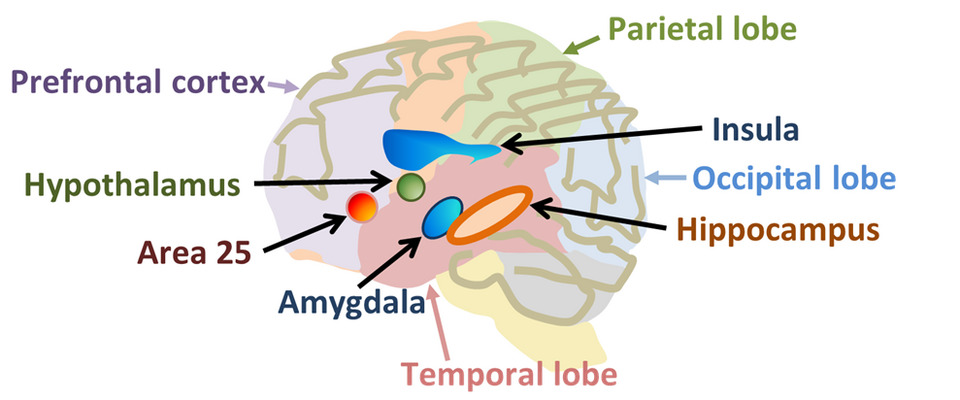
Our nervous system processes grief in different ways:
The Amygdala (which processes emotions) – interprets loss as danger. This leads to emotional flooding, fear, anger. It also stores emotional memories, and that triggers intense waves of grief.
The Prefrontal Cortex (command centre of the brain) becomes overloaded with planning and thinking. It’s using all its bandwidth to handle the pain, resulting in forgetfulness (grief brain), lack of focus, struggle to organise thoughts and reduced impulse control.
Grief can also feel like actual physical pain. This is because attachment bonds that are stored in the brain interpret the loss of the person as a threat to survival. When we describe the feeling of heartache after the loss, it’s the brain processing the separation.
The Wave Model Of Grief
While going through grief, we move between two states:
Land of loss and Land of restoration.
When in land of loss, we experience intense emotions, crying, yearning, pain, anger and many more.
When in the land of restoration, we are problem-solving, doing daily tasks and avoiding grief for short periods.
Grief feels like waves, and that is a normal sign of the brain processing the loss. The brain needs to move back and forth to finally heal.
Over time, the brain rewires (neuroplasticity) and forms a new internal representation of the loss. It’s like an updated GPS map of our lives with new routines and associations.
Healing is not about forgetting; it’s about reorganising and moving forward.
Symptoms Of Grief
Grief is a whole body and whole mind experience. It is assessed across multiple domains because it affects our emotional, social, physical, cognitive and behavioural functioning.
Emotional responses to grief can be intense and unpredictable, like:
- Crying
- Feeling numb
- Feeling lonely
- Sadness and longing for the deceased
- Anxiety
- Anger, frustration
- Guilt of not being able to more
- Shame
- Sometimes Relief (especially if you have been a caregiver) and then guilt
- Mood swings
Our body experiences grief through the nervous system and can feel the stress physically with:
- Body aches/muscle tension
- Tightness in the chest
- Heart palpitations and shortness of breath
- Exhaustion
- Lack of sleep (sometimes excessive sleep)
- Loss of appetite (sometimes overeating)
- Headaches
- Nausea/stomach pain
- Agitation
- Feeling heavy, low or drained
Grief affects our cognitive functioning, and clients often describe feeling:
- “Foggy”
- Confused (spaced out)
- Lack of focus
- Not being able to be organised
- Rumination
- Difficulty in making decisions
- Feeling shocked
- Intrusive thoughts about the loss
- Remembering and imagining conversations with the deceased
- Questioning meaning, purpose, or identity
Important to note that cognitive functioning feels very intense initially but gradually becomes more manageable.
Impact Of Grief
Grief can impact our social life and relationships in the form of:
- Withdrawal from social interactions
- Feeling is isolated or misunderstood
- Avoidance (people or places), social rituals or celebrations
- Being “needy” – seeking excessive reassurance
- Conflict in relationships
- Change in family dynamics
- Loneliness even in the company of others
- Crave connections or avoid them (sometimes simultaneously)
The nervous system tries to cope with the overload, and that brings about a shift in behaviours:
- Routine changes
- Clinging to things that remind you of the person (messages, clothes etc)
- Crying spells
- Restlessness
- Increase in maladaptive behaviours of substance use (alcohol, overeating, smoking)
- Lack of productivity and motivation
- Overworking to distract from feelings
- Rituals (lighting candles, writing letters, talking aloud to the person)
- Neglecting self-care
Behaviour tends to keep you connected to the person and provide temporary relief.
How Can I Heal From Grief?
Grief truly comes in waves and takes us by surprise.
A very important point to remember is the fact that grief does not follow a straight line. You could feel a bit lighter for a day and then feel really heavy the next.
Healing does not mean forgetting. It means finding ways to carry the loss with a bit of ease, meaning and connection. Some practices that can support you in this journey:
1. Maintain a routine.
Structure protects our mental health, especially during bereavement. This helps in feeling safe and stable.
- Keep the scheduled wake-up and bedtime
- Eat on time and eat regular meals
- Go outdoors, at least once in the day – go for a walk
- Have an anchor task for each day
2. Allow yourself to ‘feel the feelings’ rather than fighting them – suppressing them will make it heavier.
This helps reduce emotional avoidance and guilt for feeling a certain way.
- Set aside ‘remembering/feeling’ time. Weekly, set aside (10 minutes) to dedicate to feeling your emotions without any judgement.
- Name your emotions, out aloud. “This is sadness. I am feeling lonely. This is longing.”
- Remind yourself that nothing that you are feeling is wrong. Remove all judgement and acknowledge your feelings. “It’s ok for me to miss my partner. I am unable to listen to this song because it was ‘our’ song.”
- Schedule a time for (10-20 minutes) for intentionally thinking about, remembering and even crying for your loss.
This helps in not getting swallowed by grief, all day long
3. Try and regulate yourself by following some simple routines.
This helps you to stay grounded. They don’t get rid of the grief, but they help you make space for it.
- Placing both your feet on the floor and taking a moment to recognise how that feels
- Slow breathing (box breathing)
- Warm showers
- Holding something comforting (blanket, soft toy)
4. Grief makes people feel isolated and lonely. Small connections help regulate the nervous system.
- Go for coffee or walk with a friend
- Become a part of a support group
- Spend time with pets or nature (if people feel too overwhelming)
5. Grief comes with harsh judgment. Be kind and compassionate towards yourself.
Speak to yourself as you would to a friend: “This is hard, and you are trying your best. You loved the,m and hence the hurt is intense. I will learn how to live in this new reality.”
6. Allow yourself to have a moment of relief.
Don’t feel guilty when you laugh or enjoy something.
- Engage in a hobby
- Watch something that you enjoy or find comforting
7. Engage in rituals.
They help integrate grief into your daily routine. This helps continue the relationship in the new state.
- Create a small space of memories
- Play music that connects you to the person
- Light a candle
- Remember the significant dates
- Continue to do something that both of you enjoyed/shared
You never “get over” the grief. You learn to manage it and then live with it. It’s a slow process to reweave our life and identity – and it’s possible.
How Can Therapy Help?
You don’t need to wait until it becomes unmanageable. Therapy can help, if you feel like grief is overwhelming you, you feel stuck, unable to function, loss was traumatic, sudden and if there’s any guilt that is unresolvable.
Sometimes clients feel a lack of closure or have unsaid feelings, especially when the relationship is complicated (abuser, estranged relatives). Your therapist can help you by equipping you with coping tools, meaning-making and giving a safe space to your pain.
There are layers of emotions which may be confusing, and the support from your therapist will assist you in differentiating and naming them. You learn to tolerate the painful emotions rather than avoid them.
Grief Doesn’t End—It Evolves
One of the most important things I tell clients is – Grief isn’t something we finish. It’s something we learn to live with.
With time, the intensity lessens. The waves become less overwhelming. The meaning of the loss becomes clearer. And people discover they can carry grief alongside growth, connection, and new experiences.
Therapy doesn’t remove grief—nothing can.
But it can make grief survivable, held, and eventually, transformative.
 Written by Yamini Yadav, Associate Counsellor