
ADHD in children
Every child’s mind works differently. When your child has ADHD, the right understanding and guidance can make everyday challenges feel more manageable.
We work with you to recognise the signs, understand what your child needs, and find practical ways to support their confidence and growth.
What is ADHD in children?
ADHD stands for attention-deficit hyperactivity disorder. It is a neurodevelopmental condition that affects how your child focuses, manages impulses, and regulates their energy and emotions.
ADHD impacts executive functioning. These are the mental skills your child uses to:
- Plan tasks
- Organise information
- Remember instructions
- Complete activities
You can think of this as the brain’s ‘management system’, guiding how your child navigates daily life.
These differences often appear in childhood and may continue into adulthood. With the right support, your child can build practical strategies, strengthen their abilities, and manage challenges more confidently.
Symptoms of ADHD in children

Children with ADHD may show patterns of behaviour that affect how they focus, move, and respond to others. These behaviours are usually consistent and can impact daily routines at home and in school.
Inattention
Your child may find it hard to stay focused or organised. You may notice that your child:
- Loses track of tasks or instructions
- Struggles to complete schoolwork
- Becomes easily distracted
- Forgets everyday things
These challenges can make learning and following routines feel overwhelming.
Hyperactivity
Your child may seem constantly on the move or restless. You might notice that they:
- Fidget or leave their seat often
- Find it hard to sit still during lessons or meals
- Talk more than expected
- Feel driven to keep moving
This can affect your child’s ability to take part in structured activities and quiet tasks.
Impulsivity
Your child may act quickly without thinking through consequences. You may observe that they:
- Interrupt conversations
- Have difficulty waiting their turn
- Act without considering risks
- Intrude on others’ activities
These behaviours can affect relationships and social interactions.
It is important to remember that all children show these behaviours from time to time. With ADHD, these patterns are more frequent, persistent, and noticeable across different settings, such as home, school, and social environments.
Causes of ADHD in children
The exact causes of ADHD are not fully understood. Research suggests it develops from a combination of genetic and environmental factors that influence how your child’s brain grows and functions.
Genetics play a significant role. It’s thought that ADHD is highly heritable, meaning it often runs in families and can be passed from parents to children. If you or other family members have experienced similar challenges, this can help explain your child’s behaviour.
Early development factors may also contribute. Children born with low birth weight (less than 2 kg) or very low birth weight (less than 1.5 kg) may have a higher likelihood of developing ADHD, as early brain development can be affected.
Understanding these factors can help you make sense of your child’s experience. ADHD is not caused by parenting style or behaviour. With the right support, your child can learn to manage challenges and build on their strengths.
Diagnosing ADHD in children
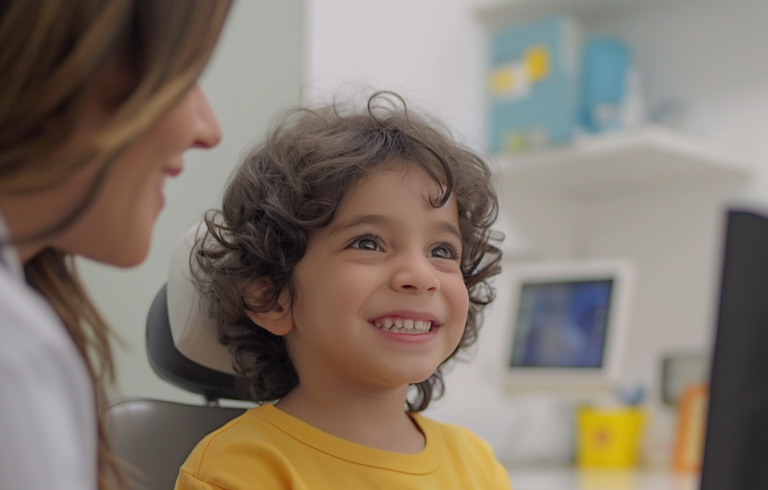
Diagnosing ADHD involves building a clear picture of your child’s behaviour across different settings. At Us Therapy, our clinicians gather information by speaking with you and your child’s teachers, observing your child’s behaviour, and using simple rating scales.
The assessment usually includes:
- Developmental history
- Medical and birth history
- Behaviour at home, school, and social settings
- Family history
A diagnosis is based on patterns of inattention, hyperactivity, and impulsivity that are:
- Not typical for your child’s developmental stage
- Present for at least 6 months
- Seen across more than one setting
We also consider environmental factors to avoid misdiagnosis. For example, if difficulties appear only in one setting, they may be linked to that environment rather than ADHD.
A thorough ADHD assessment helps ensure your child receives an accurate diagnosis and the right support.
Treating ADHD in children
Treatment for ADHD depends on your child’s age, needs, and daily environment. Our goal is to help your child manage challenges while building independence and structure in everyday life.
Preschool Years
For younger children, behavioural strategies are usually the first step. These approaches help your child develop early skills in a supportive and structured way.
This may include:
- Clear and consistent routines, such as fixed times for meals and homework
- Structured environments that reduce distractions and support focus
- Positive reinforcement, including praise and rewards, to encourage helpful behaviours
These strategies work because young children respond well to consistency and encouragement. They help your child understand expectations and build positive habits over time.
School Age & Adolescents
As your child grows, a combination of behavioural strategies and medication may be recommended.
Behavioural support continues to provide structure and guidance.
Medication can help reduce symptoms of inattention and hyperactivity, making it easier for your child to focus during lessons, follow instructions, and engage in daily activities. It should always be prescribed and monitored by a qualified medical professional to ensure it is safe and effective for your child.
How to support children with ADHD
Children with ADHD often need more structure and guidance to manage attention, impulses, and daily routines. Appropriate support can help your child build confidence and develop skills that work for them.
Helpful strategies include:
- Creating clear and consistent routines to provide predictability
- Allowing short movement breaks to help your child regulate energy and maintain focus
- Using simple reminders, such as visual notes or prompts, to support memory and organisation
Focus on building systems that support your child’s strengths. For example, if your child is forgetful, you can encourage a simple habit of checking their belongings before leaving a place.
Children with ADHD may receive frequent criticism, especially in school, which can affect their self-esteem. Recognising effort and praising progress, not just outcomes, can help your child feel understood and motivated to keep trying.
ADHD is not caused by parenting. What matters most is helping your child feel secure and capable in their daily life.
Learn more about supporting your child in our ADHD Guide For Parents.
Find support for ADHD in children in Singapore
Getting the right support can make a meaningful difference in how your child learns, behaves, and feels each day. At Us Therapy, we work closely with you to understand your child’s needs and provide practical, evidence-based care in a safe and supportive environment.
Contact us today to find the right support for your child.
How Can Us Help You?

Experienced Therapists
Our processes and quality assurance is led by Dr.Emma Waddington, a UK-trained senior clinician psychologist and Founder of Us Therapy, with over 20+ years of experience in helping individuals in Singapore.
Holistic & Personalised Approach
Our clinicians draw from various therapeutic models to create a holistic approach. At Us, we have seen hundreds of clients and we recognise that each individual is unique. Our approach is tailored to you but always includes customised treatment plans and integrative techniques.
Thorough Assessment
At Us, we pride ourselves on our comprehensive assessment processes. We will undergo a thorough assessment process with you in your first sessions before we come up with a plan for your therapy.
FAQs about ADHD in children
It is normal for children to be active, distracted, or forgetful at times. If these behaviours are frequent, persistent, and start affecting your child’s learning, behaviour, or relationships, it may be helpful to seek an assessment.
Getting support early helps you better understand your child’s needs and put the right strategies in place to support their development and wellbeing.
ADHD can change over time, but it does not simply disappear. With the right support, your child can learn to manage symptoms, build on their strengths, and function well at home and in school.
Effective therapy approaches for children diagnosed with ADHD include Behavioural Therapy directly with the child and behavioural parent training to support parents in carrying out the strategies at home.
At present, research tells us that behavioural parent training is the most effective form of treatment as it ensures that the child continues to receive support outside of sessions.
With the right support, parents can help children learn skills that boost their resilience in the long run.
Our Therapists



What To Expect
Initial Consultation – A Space to Be Heard
The first session is all about getting to know you. It is a conversation—one where you can share what is been on your mind, what has been feeling difficult, and what you would like support with. Your therapist will ask questions about your background, experiences, and goals, but there is no pressure to answer any questions—just a safe space to begin.
Questionnaires & Onboarding Surveys – Understanding the Full Picture
To help tailor therapy to your needs, you may be asked to fill out some brief questionnaires before or after your first session. These can give insight into things like mood, stress levels, relationship patterns, or coping strategies. They are not tests—just tools to help your therapist understand how best to support you.
Individual Therapy Sessions – Your Journey at Your Own Pace
Each session is a step forward in your journey. Therapy is not just about talking—it is about discovering new ways to navigate life’s challenges, make sense of emotions, and feel like you are getting the most out of your life. Depending on your needs, sessions may focus on:
- Exploring patterns of thought and behavior
- Understanding past experiences and their impact on the present
- Developing practical coping tools
- Strengthening emotional resilience
Feedback Sessions – Reflecting and Adjusting
After the first few sessions (or after assessments), a feedback session provides space to reflect on how therapy is going. This is a chance to talk about what has been helpful, what you would like more of, and how therapy can continue to best serve you.
Intervention – The Heart of Therapy
Intervention is where meaningful change happens. Every therapy journey is unique, and the approach will be shaped around what works best for you. Some common approaches include:
🌱 Cognitive Behavioral Therapy (CBT) – Helping to identify and shift unhelpful thought patterns, reduce anxiety, and develop healthier ways to cope and new patterns of behaviour.
🧠 Schema Therapy – Deep, transformational work to uncover long-standing patterns that might be keeping you stuck, often rooted in early life experiences.
💙 Acceptance and Commitment Therapy (ACT) – Learning to handle difficult emotions with self-compassion and move towards what truly matters in life.
🌊 Eye Movement Desensitization and Reprocessing (EMDR) – A powerful approach for healing trauma and distressing memories, helping the brain reprocess them in a way that feels less overwhelming.
🧘 Mindfulness-Based Approaches – Building self-awareness, grounding techniques, and ways to manage stress and emotions with greater ease.
Fees
Individual Counselling Rates
Clinician type
Fees and Duration
Clinic Founder
$325
Principal Psychologist
$305
Senior Clinical Psychologist
$277
Educational Psychologist
$277
Clinical Psychologist
$251
Senior Counsellor
$251
Counsellor
$185
Associate Counsellor
$120
Phone calls / Emails
Clinicians rate pro-rata (10 Mins)

Last Word
Every child with ADHD experiences the world in their own way. With the right understanding, structure, and guidance, your child can build confidence, develop meaningful skills, and thrive in everyday life.